Les 5 mythes les plus répandus dans le monde du parachutisme!
Temp de lecture estimé: 6 minutes
Mythe numéro 1 – On remonte quand le parachute ouvre
Si vous prévoyez faire un saut en parachute prochainement, vous avez sûrement regardé quelques vidéos pour vous préparer! Dans les vidéos de saut en parachute tandem, on a l’impression que les parachutistes « remontent » au moment ou l’instructeur déploie le parachute!
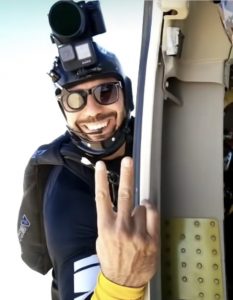
Ce n’est qu’une impression! Elle est due au fait que la prise de vue est celle d’un caméraman aérien externe qui continue de tomber à vitesse terminale, alors que le duo instructeur et invité tandem est ralenti par l’ouverture du parachute.
Il s’agit donc d’un ralentissement et non d’une ascension!
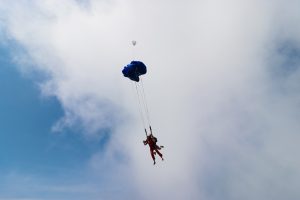
Mais alors, quel est le changement de vitesse?! La vitesse terminale de chute libre atteinte lors d’un saut en parachute tandem est d’environ 200km/heure. Une fois le parachute ouvert, la vitesse de descente est alors d’environ 20km/heure ou de 1000 pieds/minute.
Si le parachutisme demeure un sport extrême, un sport de sensations et qu’il pourrait se produire une ouverture plus rapide, soyez rassurés, en général, le ralentissement se fait progressivement, comme un freinage en voiture!
Mythe numéro 2 – »Sauter en parachute?! J’ai bien trop le Vertige! »
Le vertige est une sensation donnant à une personne l’illusion que son corps ou les objets environnants sont animés d’un mouvement de rotation ou d’oscillation. Pour certains, c’est même une sensation angoissante et écrasante de perte d’équilibre. Vous vous reconnaissez?
Comment se construit le vertige?
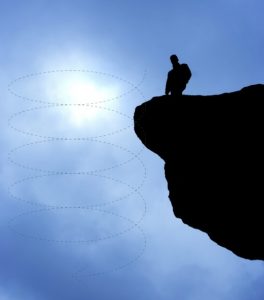
Il s’agit d’une discordance mal gérée par le cerveau quand il reçoit deux informations contradictoires:
1. L’oreille interne (en charge de l’équilibre) signale que le corps est en position debout, tête haute, avec les pieds posés sur une surface solide. Tous nos récepteurs «proprioceptifs » musculosquelettiques le confirment… Nous ‘’sentons’’ notre position debout sur du solide.
2. Pendant ce temps, les yeux montrent le vide en contrebas, dans la (presque) totalité de notre champs de vision. Notre vision binoculaire perçoit une absence de repère qu’on appelle le ‘’vide informatif’’.
Malheureusement pour l’humain l’information fournie par les yeux prime sur le reste.
Tiraillé, le cerveau ne «croit» donc plus du tout à notre position debout et solide!
Maintenant, parlons de saut en parachute!
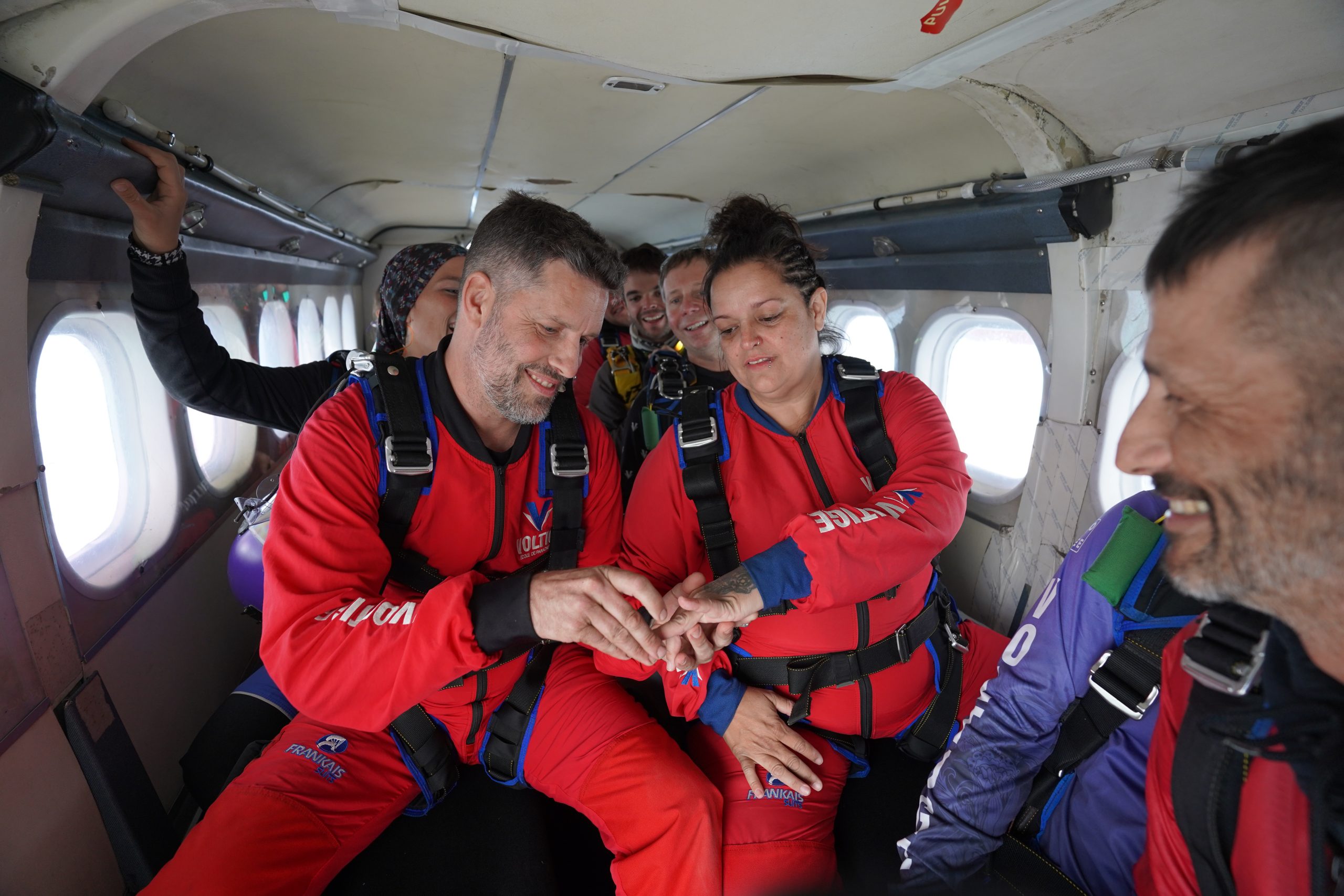
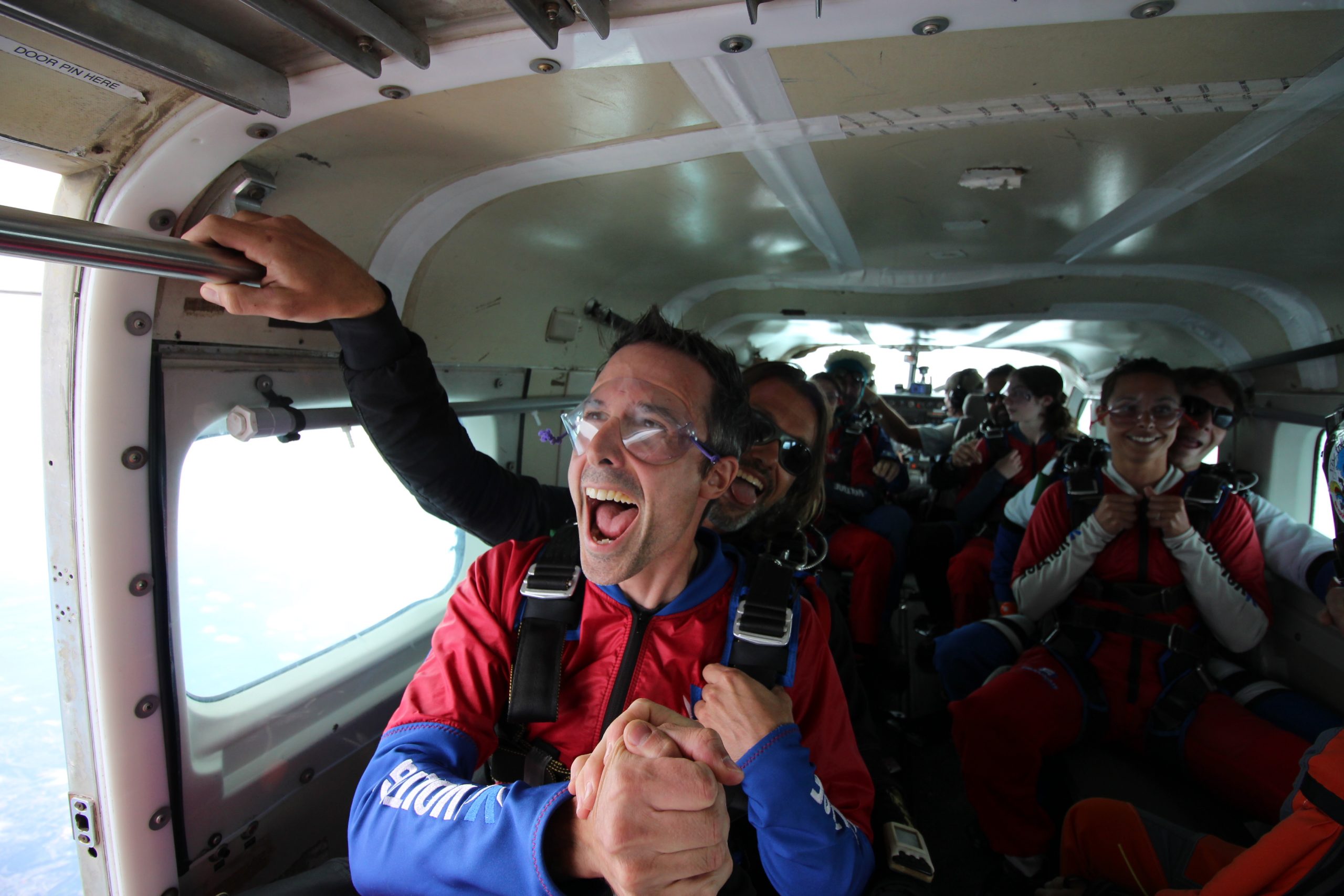
1. Dans nos avions de parachutisme, vous serez assis et vous pourrez contempler la vue par les hublots, ce qui vous donnera des repères physiquement proches de vous.
2. Sauf si des raisons de santé des genoux vous en empêchent, votre instructeur vous poussera doucement vers la porte, de la position assise directement à la position à genoux.
3. Il vous demandera d’appuyer votre tête contre son épaule et de regarder vers le haut, ce qui permet d’éviter la tension mentale créée par le vide inférieur. De plus, vous aurez encore le cadrage de la porte dans votre champ de vision.
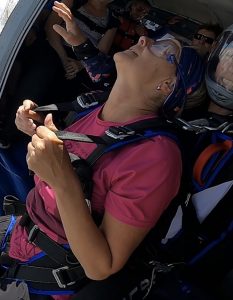
4. Vous serez attaché solidement à votre instructeur et le contact physique est connu pour rompre la boucle cérébrale de la peur en la noyant sous l’information perçu physiquement.
Voilà! Vous aurez sûrement peur… Mais vous n’aurez pas le vertige!
P.S. L’hypoglycémie et la déshydratation peuvent altérer les perceptions cérébrales… Ayez une petite collation sous la main!
Mythe numéro 3 – « Je n’aime pas les manèges… On oublie le parachute! »
D’abord, discutons de l’effet ascenseur!
Que vous aimiez ou non les manèges, vous êtes probablement familier de « l’effet ascenseur’’, mais saviez-vous que cela porte un nom? Un AIRTIME!
Un AIRTIME est la sensation d’impesanteur, de tomber dans le vide ou d’allègement résultant d’accélération négative vers le bas ou d’une réduction de la gravité de un gramme par rapport à celle sur terre, au niveau de la mer et au repos. Cette dernière est celle procurant le plus d’effet et que l’on peut ressentir dans les montagnes russes.
Les airtimes et la sensation de tomber dans le vide résultent de l’inertie du train et de ses passagers qui s’oppose à la force qui tire le manège vers le bas … Ce qui fait décoller les passagers de leur siège un instant.
Maintenant, parlons de saut en parachute!
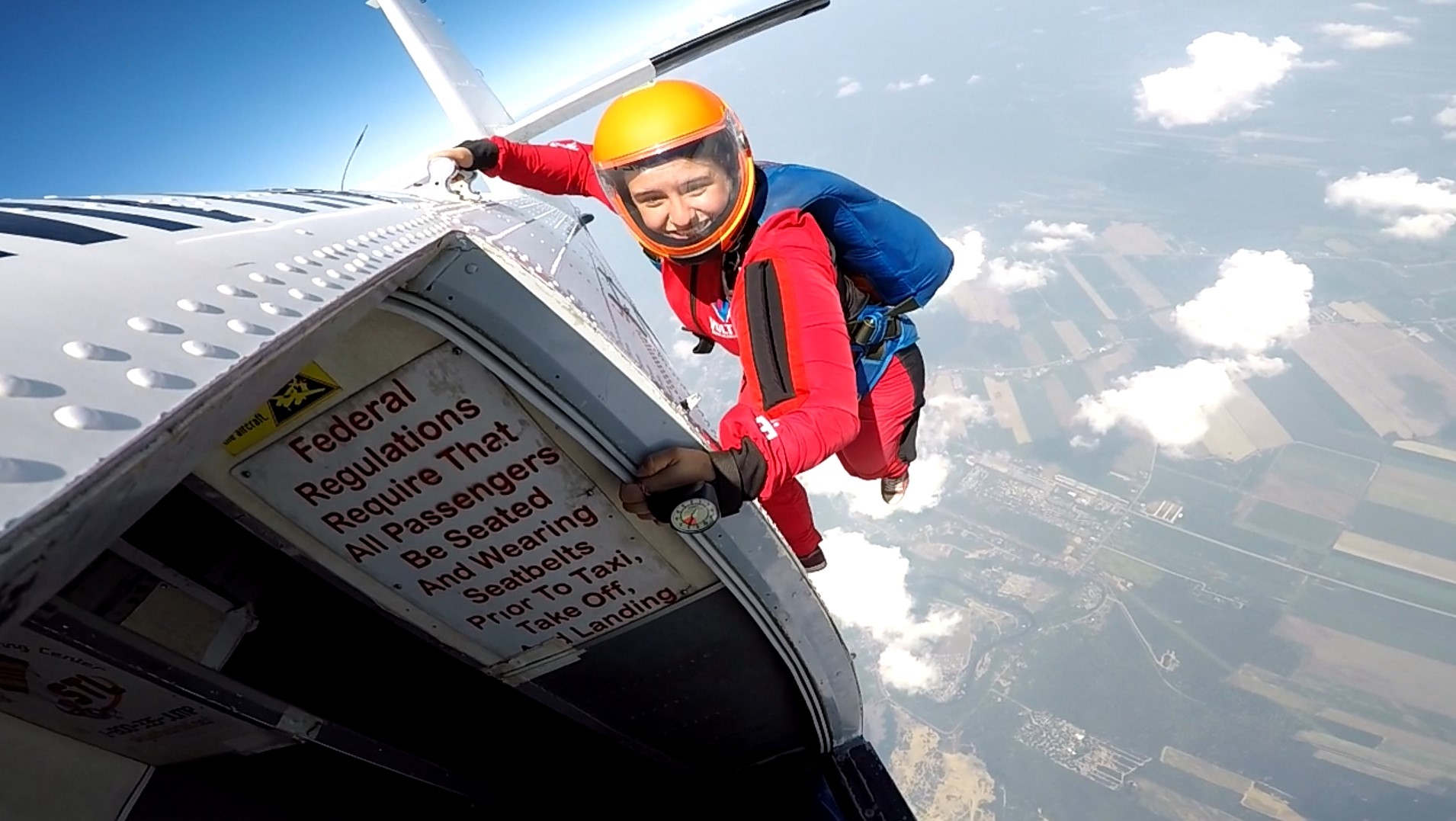
Quand l’avion atteindra l’altitude de largage des parachutistes, il décélèrera et prendra une vitesse constante à 85 noeuds/h (150 km/h). Quand ce sera fait, le pilote accordera la permission d’ouvrir la porte de l’avion.
Imaginez maintenant ouvrir la fenêtre de votre voiture en roulant à 150 km/h sur l’autoroute et sortir votre main pour l’opposer à la résistance du vent!
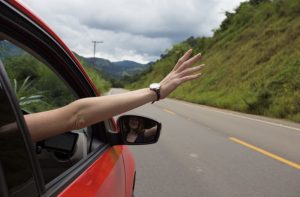
Quand votre instructeur donnera la poussée de départ, c’est exactement sur un coussin d’air similaire que votre corps ira se déposer.
En théorie, vous ne sautez donc pas du tout dans le vide, mais bien dans un ‘’air bag’’. Si votre cœur fait 3 tours, c’est seulement l’effet de l’adrénaline!
Mythe numéro 4 – » Il annonce 80% de pluie! Est-ce que les sauts sont annulés?! »
Contrairement à la croyance populaire…
Une probabilité de pluie de 80% ne veut pas dire qu’il y a 80% de chance qu’il pleuve où vous vous trouvez… Mais plutôt qu’il y a 100% de chance de pluie sur 80% du territoire visé par la prévision!
Par exemple: Disons qu’il annonce 18% de probabilité de pluie à Joliette…

Il annonce en fait 100% de pluie, mais sur SEULEMENT 18% du territoire!
100% de pluie… mais combien de millimètres? À quelle heure? Et pendant combien de temps?!
Il pourrait s’agir de 2mm/heure toute la journée ou d’un orage de 10mm/heure pendant 1 heure! De 8h00 le matin à 9h00!
Ce sont les radars météo qui nous permettent de le savoir!
D’ailleurs, même avec une probabilité de 80% de pluie… il ne faut pas oublier qu’il n’annonce aucune pluie sur 20% du territoire!
C’est notre boulot de faire l’analyse des radars! Il est donc primordial de nous appeler avant votre départ de la maison!
Mythe numéro 5 – Frapper un oiseau en chute libre
L’idée vous a traversé… que ce serait probablement désagréable de vous prendre un oiseau en pleine poitrine… ou pire…
Et bien… Pourquoi pensez-vous que vous êtes attachés devant votre instructeur?!
C’EST UNE BLAGUE!
Les chances de frapper un oiseau en chute libre sont presque de l’ordre de l’impossible! Voici pourquoi!
L’ouverture des parachutes tandem se fait à environ 5000 pieds d’altitude. L’ouverture minimale recommandée au Canada pour un parachutiste seul et certifié est à 2500 pieds.
Si certains oiseaux de proie peuvent parfois voler aux environs de 1500 pieds, la plupart des oiseaux volent à un maximum de 500 pieds. La grande majorité des oiseaux ne sont donc pas une source d’inquiétude!
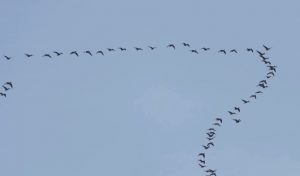
Mais qu’en est-il des grandes migrations?
Certains oiseaux peuvent voler plus haut, comme le cygne qui circule jusqu’à 8000 pieds d’altitude, mais deux raisons expliquent qu’on ne les rencontre pas :
1. D’abord, grâce à ‘’The Big Sky Theory’’ : Une théorie mathématique d’aéronautique qui stipule que deux corps/objets en vol ou en chute libre ont statistiquement très peu de chance d’entrer en collision en raison de l’immense différence entre la taille en 3D du ciel versus la taille de ces corps/objets.
2. Parce qu’en raison de l’achalandage de notre espace aérien les oiseaux contournent naturellement notre zone d’opération. Qui plus est, ils ne volent généralement pas à haute altitude au dessus de notre territoire.
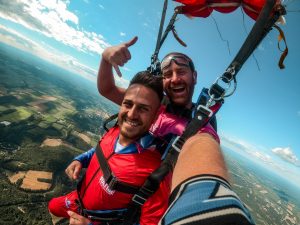
Une fois en vol sous le parachute ouvert, il est possible que vous partagiez l’espace aérien avec certains oiseaux profitant des thermiques (courants d’air chauds), mais cela demeure très rare, car ils sont naturellement craintifs! Si cela vous arrive, profitez de ce moment privilégié!
Finalement, n’hésitez pas à communiquer avec nous pour toutes vos questions! Il nous fera plaisir d’y répondre et de vous rassurer! Quelqu’un dans votre entourage refuse de sauter en raison d’un ou plusieurs de ces mythes? Envoyez-lui cet article de blogue! Peut-être que sa curiosité dépassera les craintes, grâce à vous!